

Economy and Crime
The Impact of Organized Crime on Income and Employment, and Strategies to Reduce Widespread Illegality
Organized crime not only destroys income and jobs but also takes human lives. We can combat it more effectively using artificial intelligence, provided we fully utilize available databases to predict the future actions of these organizations. Widespread illegality undermines our social fabric and diverts resources that could otherwise fund public goods. To tackle the issue of youth gangs, it is crucial to invest in schools and social spaces in peripheral areas. Additionally, providing legal sources of income to those in poverty is important. Our findings show that in already disadvantaged families, job loss or the costs associated with parenting push fathers towards crime. This is a crucial consideration for family support measures and social assistance programs.
Related products
-
Sale!
Will We Ever Get to Retire?
Original price was: 6,50 €.4,90 €Current price is: 4,90 €. Managing Population Decline and Helping Younger Generations Invest for the Long Term To make our pension system sustainable amid falling birth rates, we need to take several steps – starting with stopping the constant rule changes and avoiding any further hikes in social security contributions. A better approach is to slow the decline in the number of contributors through a mix of policies, including public support for those who are not self-sufficient and stronger oversight of all pension schemes, especially professional pension funds.Select options This product has multiple variants. The options may be chosen on the product page
 -
Sale!
Transport in Turmoil
Original price was: 6,50 €.4,90 €Current price is: 4,90 €.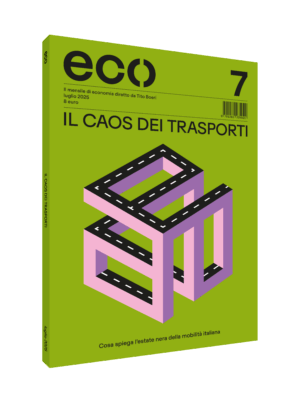 Why Italy’s Summer of Gridlock Is No Accident Summer is the season that puts Italy’s transport system to the toughest test, exposing it to delays and breakdowns. Yet it would be wrong to think congestion—the real root of the problem—strikes only in the summer. It’s a year-round issue, especially in cities. The trouble is, Italy’s National Recovery and Resilience Plan pours most of its funds into big new infrastructure projects, when a smarter strategy would be to “think small”: maintaining what already exists and, above all, strengthening local public transport, the daily lifeline for millions of people.Select options This product has multiple variants. The options may be chosen on the product page
 -
Sale!
Against Women
Original price was: 6,50 €.4,90 €Current price is: 4,90 €. Tackling Gender Discrimination at Work and at Home Discrimination still runs deep in many areas of our society. It’s unfair, it weakens social cohesion, and it robs us of valuable human potential – something we can hardly afford as advanced countries face demographic decline. Women, along with ethnic and religious minorities and people who don’t conform to mainstream standards of sexuality or appearance, are often the primary targets. This issue focuses on the discrimination faced by women, who have become the main victims of the backlash against inclusion policies, particularly those pushed back overseas. Maybe affirmative action – like gender quotas – has sometimes gone too far. But that doesn’t mean we should undo decades of progress in civil rights. So how do we push back against this rollback and keep moving forward in the fight for gender equality?Select options This product has multiple variants. The options may be chosen on the product page
 -
Sale!
We Can’t Do Without Immigration
Original price was: 6,50 €.4,90 €Current price is: 4,90 €.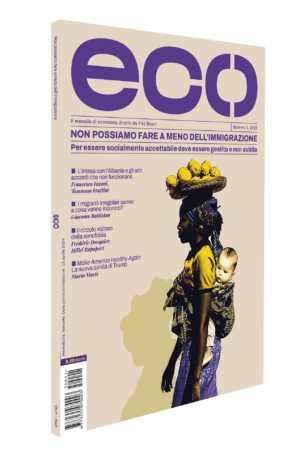 To Be Socially Acceptable, It Needs to Be Managed, Not Just Tolerated As promised to our readers, this issue of eco delves into immigration in all its complexities and contradictions. We increasingly rely on it to fill job vacancies and fund pensions, yet it remains a central concern for many. We don’t merely highlight the problems, government missteps, avoidable costs, unenforceable rules, or the gap between perceptions and reality regarding the number and identity of immigrants. We also aim to propose solutions that allow us to manage, rather than endure, immigration. From filling entry quotas to creating a pathway to citizenship and externalizing border control, we explore actionable strategies.Select options This product has multiple variants. The options may be chosen on the product page
