
Sale!

1/2024
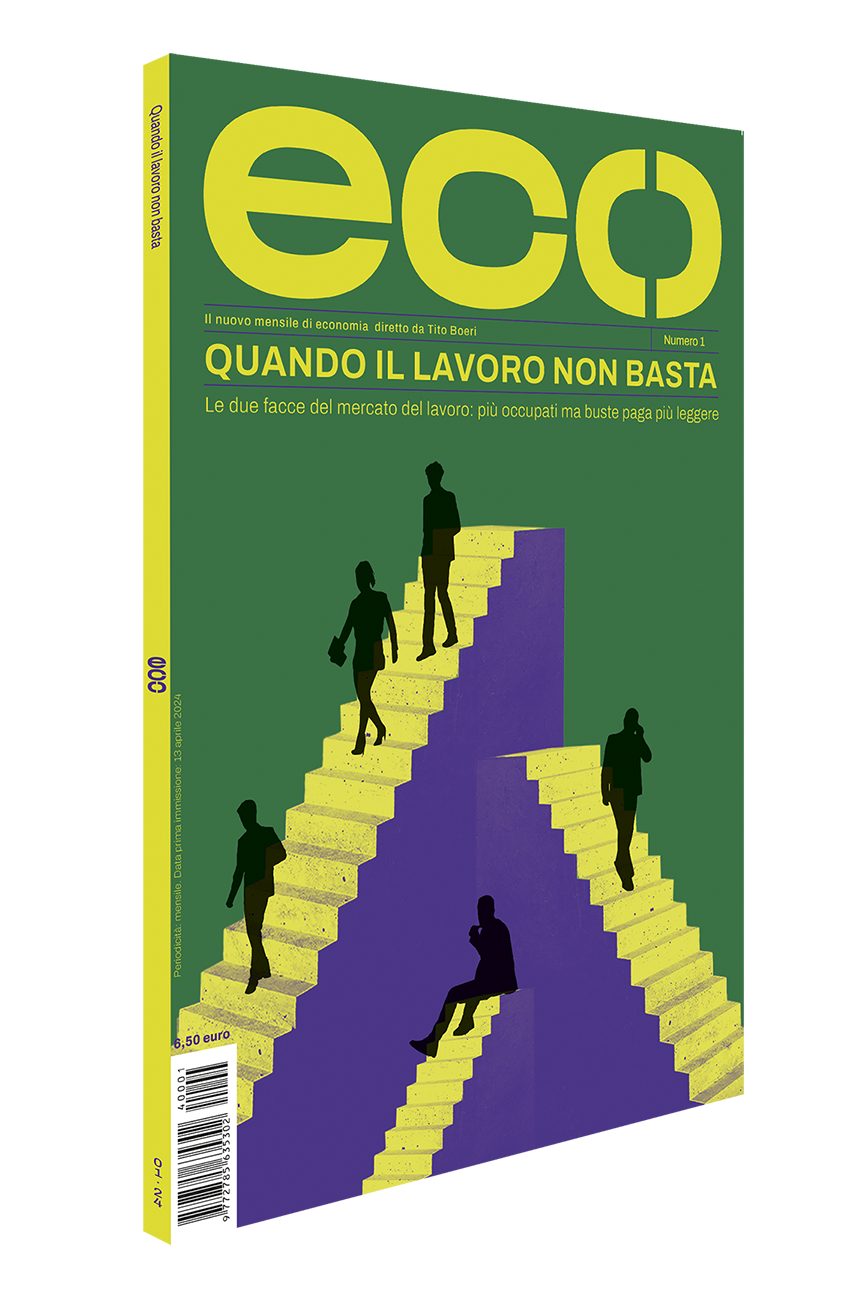
When work is not enough
The two faces of the job market: more employment but lighter paychecks
Like in other countries, Italy is seeing record levels of employment. There are more salaried workers and an increase in permanent contracts. Yet, despite these statistics, many Italian families remain frustrated and dissatisfied, as their income is insufficient to escape poverty. Particularly for laborers, wages have diminished in purchasing power. The absence of a minimum wage, ineffective collective bargaining, and the diminished strength of unions—contrary to their outward portrayal—further exacerbate the situation.
Related products
-
Sale!
What Banks Do with Our Money
Original price was: 6,50 €.4,90 €Current price is: 4,90 €. What Drives Their High Profits, How to Share Them with Savers, and What’s Driving the New Round of Banking M&A Bankers are among the most disliked – and envied – people in the world: they privatize profits and, in times of crisis, socialize losses. While bailouts can sometimes be unavoidable, they can be prevented with simple rules and strong, independent regulators. And profits, too, can be shared – not through one-off taxes, but by steadily lowering costs for customers and businesses. By contrast, heavy political involvement in banking M&A risks holding back the development of capital markets and reinforcing an economy still overly reliant on banks. Four years after Russia’s invasion of Ukraine, we also revisit the country’s economy and the situation of refugees in Europe, caught between the desire to stay and the hope of returning home.Select options This product has multiple variants. The options may be chosen on the product page
 -
Sale!
Should We Be Worried About Debt?
Original price was: 6,50 €.4,90 €Current price is: 4,90 €. Global public debt is at an all-time high. How can we keep it under control? Public debt around the world has reached unprecedented levels. Managing it requires the skill of a tightrope walker. Excessive debt can become explosive, pushing a country to the brink of collapse, as history has shown us. On the other hand, rigidly adhering to balanced budgets, as Germany did for too long, or abruptly increasing taxes and cutting expenditures to reduce debt can drive a country into recession. A better approach is to aim for a gradual reduction of debt while considering that in the coming years, more resources will need to be allocated to environmental protection and healthcare, and many countries will increase defense spending. What we absolutely must avoid is borrowing blindly, without a clear plan for spending the funds, as happened with the National Recovery and Resilience Plan (Pnrr).Select options This product has multiple variants. The options may be chosen on the product page
 -
Sale!
Will the Lights Go Out?
Original price was: 6,50 €.4,90 €Current price is: 4,90 €. Why electricity costs so much in Italy and what we can do to keep the lights on while waiting for large-scale energy storage Yes, just like children, we should be a little afraid of the dark. Blackouts, whether brief or prolonged, local or widespread, are becoming more and more common across Europe, disrupting a society that has never been so dependent on electricity. To lower this risk, we need a more diverse energy mix — one that can balance shortfalls in one source by increasing another. Just as crucial is strengthening the interconnection between Europe’s power grids. Turning away from Europe’s decarbonization goals, following the lead of the United States, would be a serious mistake.Select options This product has multiple variants. The options may be chosen on the product page
 -
Sale!
What It Takes to Defend Peace
Original price was: 6,50 €.4,90 €Current price is: 4,90 €. Europe Prepares to Rearm Amid the Decline of American Power In a world growing ever more unstable, increased investment in European defense seems all but inevitable. But so are the trade-offs: more military spending means fewer resources for civilian needs. To avoid waste and duplication, Europe needs a unified strategy—not a fragmented rearmament effort by individual EU countries. In an age of drawn-out wars and fast-moving technological change that favors the defender, a strong economy remains Europe’s most powerful strategic asset.Select options This product has multiple variants. The options may be chosen on the product page

