
Sale!

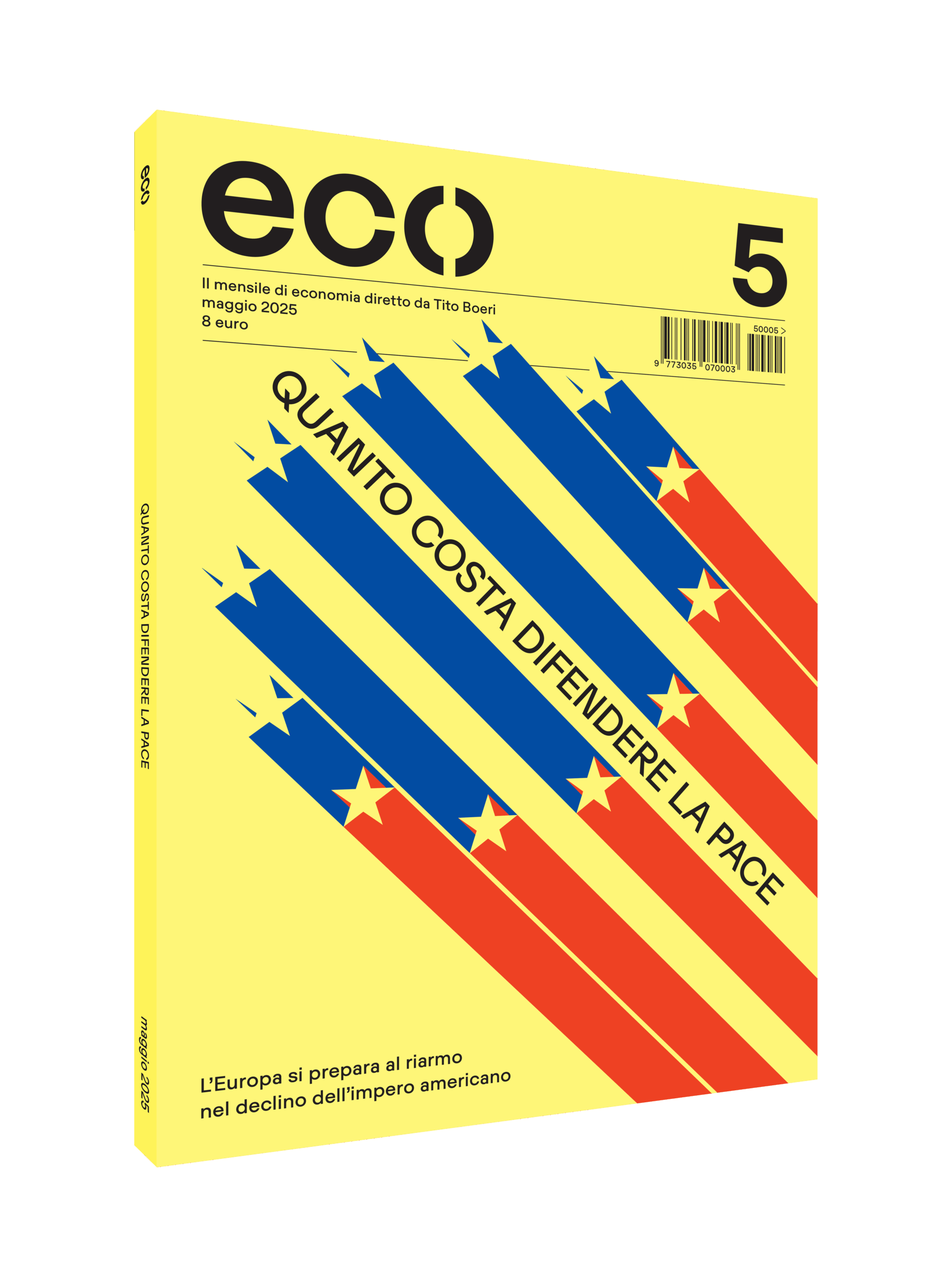
5/2025
What It Takes to Defend Peace
Europe Prepares to Rearm Amid the Decline of American Power
In a world growing ever more unstable, increased investment in European defense seems all but inevitable. But so are the trade-offs: more military spending means fewer resources for civilian needs. To avoid waste and duplication, Europe needs a unified strategy—not a fragmented rearmament effort by individual EU countries. In an age of drawn-out wars and fast-moving technological change that favors the defender, a strong economy remains Europe’s most powerful strategic asset.
Related products
-
Sale!
A World in Disorder
Original price was: 6,50 €.4,90 €Current price is: 4,90 €. In the vacuum left by the United States, Europe can lead an alliance of middle powers Like all populists, Trump knows how to destroy, not how to rebuild. In just fifteen months, he has driven a wedge between the United States and its longtime allies, sparked new conflicts, dismantled the international order, and weakened American democracy. To avoid ending up on the “imperial menu” invoked by the Canadian prime minister at Davos, middle powers must forge new balances and new forms of global cooperation in managing shared resources and conflicts. Europe is the natural candidate to lead this effort. As a successful model of genuine multilateralism, it has already demonstrated its capacity for coordinated action. At a time when external security has once again become a central concern, Europe’s social welfare model can also prove to be a strategic asset.Select options This product has multiple variants. The options may be chosen on the product page
 -
Sale!
Who Will Pay for Trump’s Tariffs?
Original price was: 6,50 €.4,90 €Current price is: 4,90 €. How Trade Wars Could Impact Income and Inflation Trump’s second presidency is shaping up to be even more aggressive than the first, with no restraints. His trade policies are driven by a mercantilist view of the economy, a narrow understanding of global interdependencies, and the interests of Big Tech. Will tariffs be used as a mere bargaining chip, or will they be enforced indiscriminately, sparking new trade wars? How will they affect income and inflation? What should we expect in key trade conflicts – between the U.S. and China, North America, Europe, and emerging markets? And what role can the European Union play? Italy, on its own, has little influence.Select options This product has multiple variants. The options may be chosen on the product page
 -
Sale!
Economy and Crime
Original price was: 6,50 €.4,90 €Current price is: 4,90 €. The Impact of Organized Crime on Income and Employment, and Strategies to Reduce Widespread Illegality Organized crime not only destroys income and jobs but also takes human lives. We can combat it more effectively using artificial intelligence, provided we fully utilize available databases to predict the future actions of these organizations. Widespread illegality undermines our social fabric and diverts resources that could otherwise fund public goods. To tackle the issue of youth gangs, it is crucial to invest in schools and social spaces in peripheral areas. Additionally, providing legal sources of income to those in poverty is important. Our findings show that in already disadvantaged families, job loss or the costs associated with parenting push fathers towards crime. This is a crucial consideration for family support measures and social assistance programs.Select options This product has multiple variants. The options may be chosen on the product page
 -
Sale!
Home Has Become a Mirage
Original price was: 6,50 €.4,90 €Current price is: 4,90 €. With soaring prices in major cities and no real housing policy, home has become the new symbol of inequality In Italy, having a home remains a universal aspiration, yet the state invests far too little to address the housing emergency. Fear of appearing to help immigrants or municipalities run by “opposing” political coalitions has stalled any meaningful action. The housing plan announced by Giorgia Meloni will only work if it truly delivers affordable student housing and public units—projects that have been stalled since the old Fanfani plan. Housing is fundamentally an issue of equality, mobility, and social cohesion. And it needs to be treated as such.Select options This product has multiple variants. The options may be chosen on the product page
