
Sale!

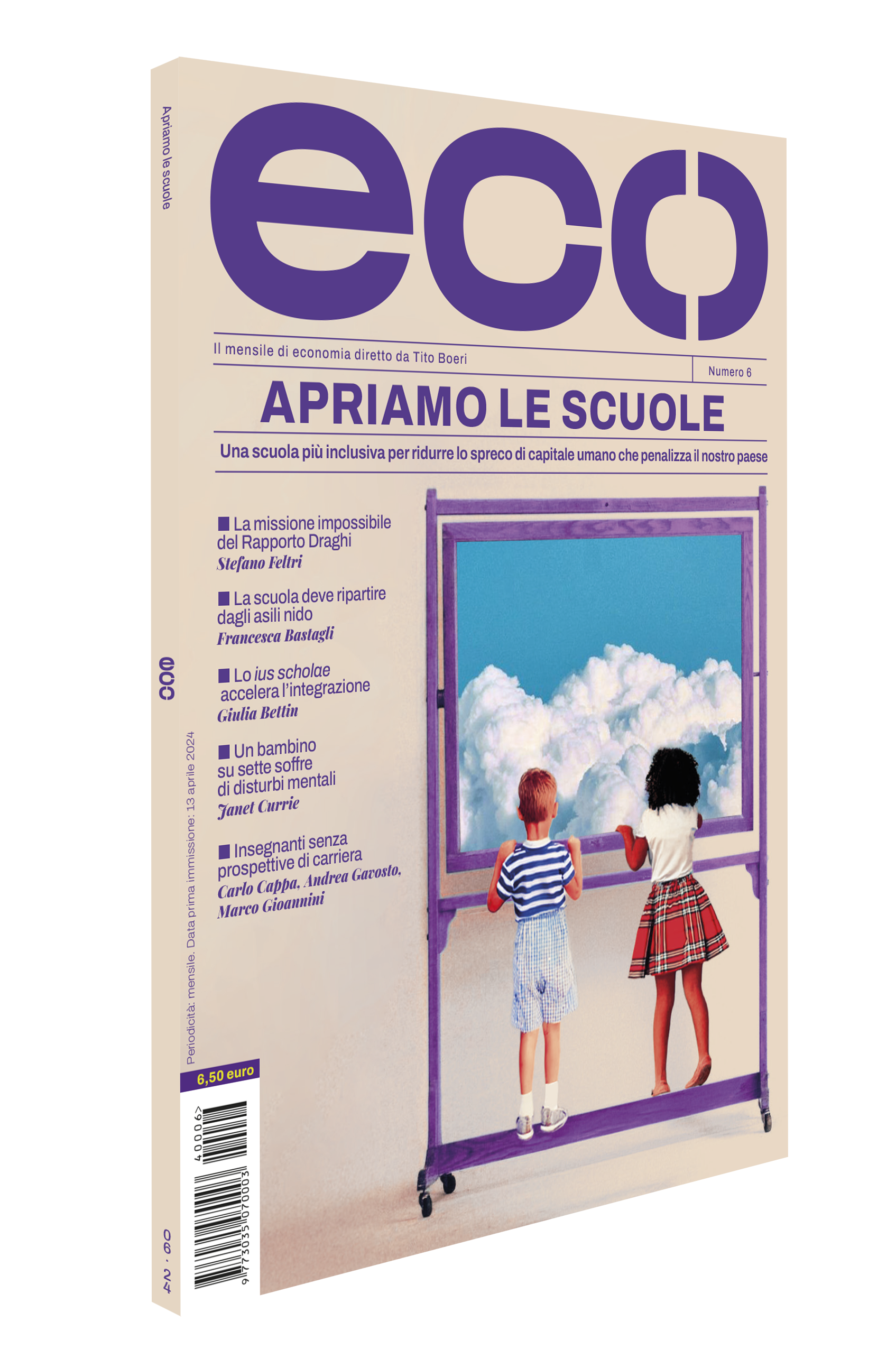
6/2024
Let’s Open Schools
A More Inclusive Education System to Prevent the Waste of Human Capital in Italy
Italy is facing a tremendous waste of human capital. Hundreds of thousands of well-educated young people struggle to find jobs, and when they do, they often end up in roles that have little to do with the skills they spent years acquiring through their studies. This is a loss we can no longer afford. Each year, about 100,000 people leave our workforce. Four years ago, only one in twenty companies reported staffing shortages; today, nearly one in two can’t fill vacant positions. To address this waste, we need to start with early childhood education, improve the quality of schools by valuing teachers’ work, and establish vocational pathways in higher education. Unfortunately, we are missing the opportunity presented by the National Recovery and Resilience Plan (Pnrr) to tackle these deep-rooted problems in Italy’s education system.
Related products
-
Sale!
Unequal Health
Original price was: 6,50 €.4,90 €Current price is: 4,90 €. The exodus of doctors and nurses, the emergency room crisis, and the forgotten lesson of the pandemic People are living longer, but the inequality in aging is growing. There are increasing disparities in longevity and the chances of having a long, healthy life, influenced by income, occupation, and place of birth. Meanwhile, young people are facing rising levels of depression. Italy’s universal healthcare system faces significant challenges. During the pandemic, we received nearly 200 billion euros from Europe. It was expected that we would use these substantial resources to prepare for these challenges. Instead, emergency medicine is in a constant state of crisis, with shortages of doctors in many specialties and an even greater shortage of nurses. With the Recovery and Resilience National Plan, we have taken on an additional 123 billion euros of debt and have no more funds for healthcare. Despite this, there are still many improvements that can be made even with limited resources.Select options This product has multiple variants. The options may be chosen on the product page
 -
Sale!
The European Opportunity
Original price was: 6,50 €.4,90 €Current price is: 4,90 €. A more united Europe can become a leader among non-aligned countries, attract global talent, and strengthen the role of the euro Today, Europe has a unique opportunity to position itself as a global reference point, thanks to its independence from rival geopolitical blocs. But to seize this moment, it must become stronger and push forward decisively with deeper integration. That’s why, before welcoming new Eastern European countries, the EU needs to reform the rules that currently allow any member state to block decisions with a single veto. On the 40th anniversary of the Schengen Agreement, the European Union could also take a major step forward by introducing a shared social security code – an important move to strengthen the European identity that, for many young people, is already a natural part of their daily lives.Select options This product has multiple variants. The options may be chosen on the product page
 -
Sale!
Can We Control Artificial Intelligence?
Original price was: 6,50 €.4,90 €Current price is: 4,90 €. Managing Its Impact on Social Interactions, the Economy, Employment, and Our Democracies There is widespread concern about how artificial intelligence might affect our lives—changing social interactions, the economy, jobs, health, information, and the functioning of our democracies. Leading scientists have called for a six-month pause on its development to better understand the path we are on. But technological progress isn’t something we should just passively witness. We have the power to shape and guide it. In this issue, we present ideas on how and where to take action to ensure artificial intelligence complements human work and improves well-being, this time without harming those with lower incomes.Select options This product has multiple variants. The options may be chosen on the product page
 -
Sale!
When work is not enough
Original price was: 6,50 €.4,90 €Current price is: 4,90 €.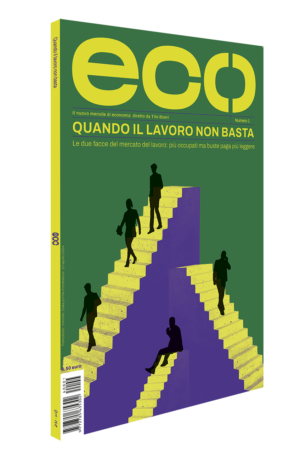 Like in other countries, Italy is seeing record levels of employment. There are more salaried workers and an increase in permanent contracts. Yet, despite these statistics, many Italian families remain frustrated and dissatisfied, as their income is insufficient to escape poverty. Particularly for laborers, wages have diminished in purchasing power. The absence of a minimum wage, ineffective collective bargaining, and the diminished strength of unions—contrary to their outward portrayal—further exacerbate the situation.Select options This product has multiple variants. The options may be chosen on the product page
