
Sale!

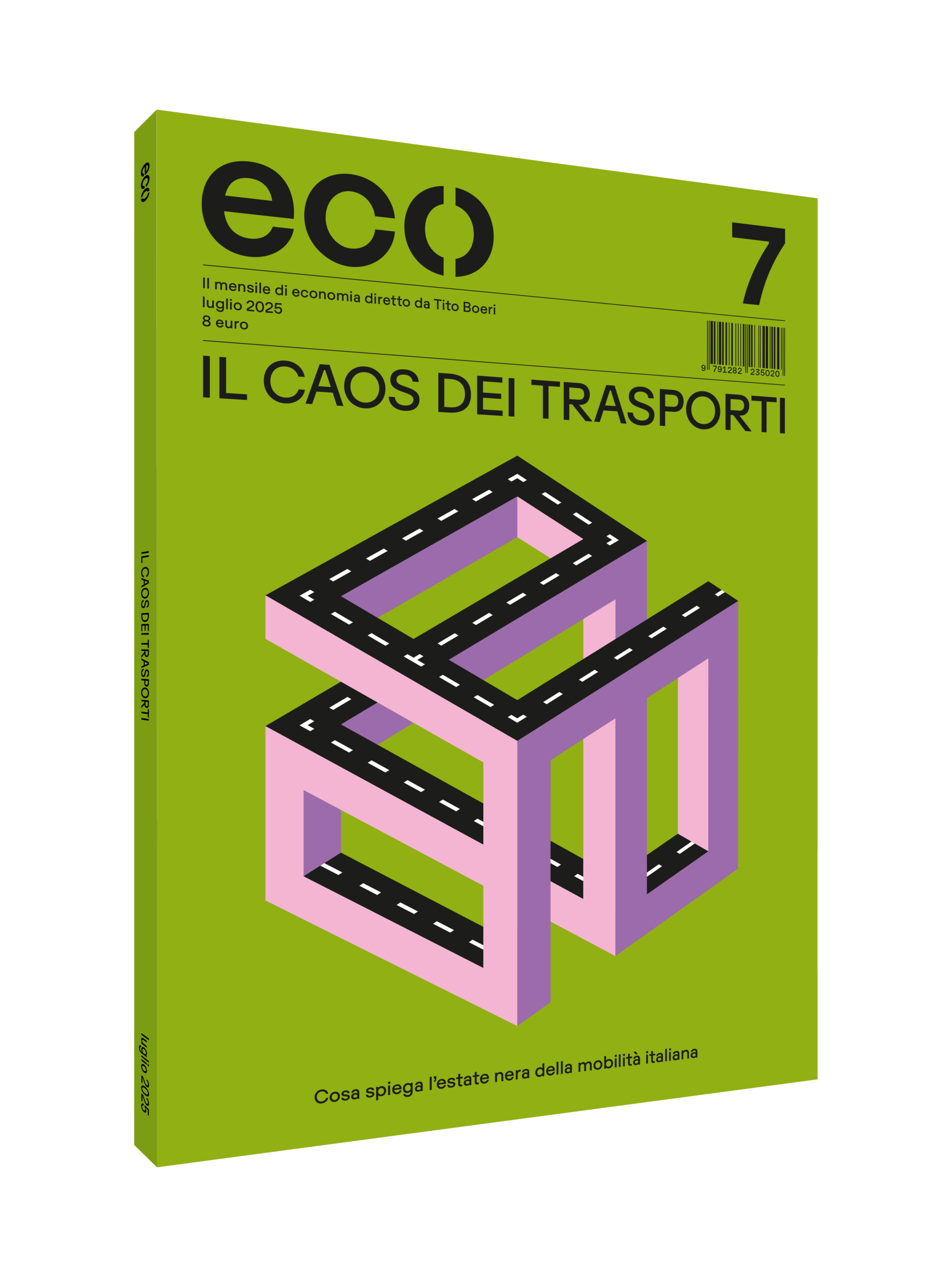
7/2025
Transport in Turmoil
Why Italy’s Summer of Gridlock Is No Accident
Summer is the season that puts Italy’s transport system to the toughest test, exposing it to delays and breakdowns. Yet it would be wrong to think congestion—the real root of the problem—strikes only in the summer. It’s a year-round issue, especially in cities. The trouble is, Italy’s National Recovery and Resilience Plan pours most of its funds into big new infrastructure projects, when a smarter strategy would be to “think small”: maintaining what already exists and, above all, strengthening local public transport, the daily lifeline for millions of people.
Related products
-
Sale!
What It Takes to Defend Peace
Original price was: 6,50 €.4,90 €Current price is: 4,90 €. Europe Prepares to Rearm Amid the Decline of American Power In a world growing ever more unstable, increased investment in European defense seems all but inevitable. But so are the trade-offs: more military spending means fewer resources for civilian needs. To avoid waste and duplication, Europe needs a unified strategy—not a fragmented rearmament effort by individual EU countries. In an age of drawn-out wars and fast-moving technological change that favors the defender, a strong economy remains Europe’s most powerful strategic asset.Select options This product has multiple variants. The options may be chosen on the product page
 -
Sale!
Irresponsible Capitalism
Original price was: 6,50 €.4,90 €Current price is: 4,90 €. Why companies are retreating from environmental and inclusion commitments – and how to revive their engagement In just four years, ESG – the idea of renewing capitalism by asking companies to take responsibility for environmental, social, and ethical issues alongside shareholder interests – has fallen out of fashion. Major missteps have fueled the pushback from the current U.S. administration, but the underlying reasons for ESG remain unchanged, from global warming to the poor ethical standards of many corporations. In this issue, we offer several ideas for rebuilding environmental and social commitment on stronger foundations and for increasing transparency around how companies generate their profits.Select options This product has multiple variants. The options may be chosen on the product page
 -
Sale!
Behind Bars
Original price was: 6,50 €.4,90 €Current price is: 4,90 €. Overcrowding fuels recidivism: why a purely punitive prison system makes society less safe We know far too little about what really happens inside prisons. In this issue of eco, we look beyond the walls of our penitentiary system and let the data speak. The overwhelming majority of inmates serve their sentences in severely overcrowded facilities. This is a chronic problem that calls for structural interventions, including the construction of new prisons. It is not only a matter of upholding constitutional principles in the treatment of those who have committed crimes, but also of ensuring greater safety for society as a whole. Overcrowding and recidivism are in fact two sides of the same coin: a purely punitive prison risks becoming a training ground for crime. By contrast, where detention conditions are better, inmates can take part in work and rehabilitation programs that support reintegration and significantly reduce the likelihood of reoffending.Select options This product has multiple variants. The options may be chosen on the product page
 -
Sale!
Unequal Health
Original price was: 6,50 €.4,90 €Current price is: 4,90 €. The exodus of doctors and nurses, the emergency room crisis, and the forgotten lesson of the pandemic People are living longer, but the inequality in aging is growing. There are increasing disparities in longevity and the chances of having a long, healthy life, influenced by income, occupation, and place of birth. Meanwhile, young people are facing rising levels of depression. Italy’s universal healthcare system faces significant challenges. During the pandemic, we received nearly 200 billion euros from Europe. It was expected that we would use these substantial resources to prepare for these challenges. Instead, emergency medicine is in a constant state of crisis, with shortages of doctors in many specialties and an even greater shortage of nurses. With the Recovery and Resilience National Plan, we have taken on an additional 123 billion euros of debt and have no more funds for healthcare. Despite this, there are still many improvements that can be made even with limited resources.Select options This product has multiple variants. The options may be chosen on the product page
