
Sale!

5/2024
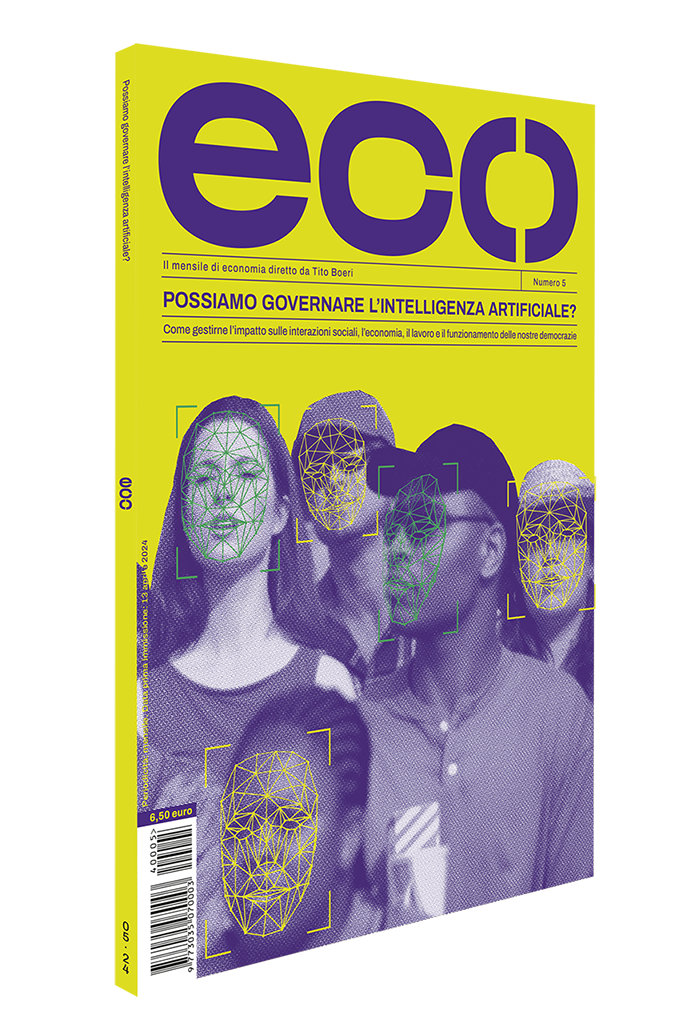
Can We Control Artificial Intelligence?
Managing Its Impact on Social Interactions, the Economy, Employment, and Our Democracies
There is widespread concern about how artificial intelligence might affect our lives—changing social interactions, the economy, jobs, health, information, and the functioning of our democracies. Leading scientists have called for a six-month pause on its development to better understand the path we are on. But technological progress isn’t something we should just passively witness. We have the power to shape and guide it. In this issue, we present ideas on how and where to take action to ensure artificial intelligence complements human work and improves well-being, this time without harming those with lower incomes.
Related products
-
Sale!
Taxes, Taxes, Taxes
Original price was: 6,50 €.4,90 €Current price is: 4,90 €. How to Ease the Tax Burden and Make the System Fairer No one enjoys paying taxes, even though they are essential to keeping the state running – especially when the system feels opaque and unfair. That’s why politicians often promise tax cuts they struggle to deliver. Yet there is room for improvement: in Italy, smaller-scale tax evasion could be curbed by encouraging compliance through incentives rather than relying mainly on enforcement, while the system could be made more balanced by taxing wealth more effectively, reforming inheritance taxes, and updating property valuations.Select options This product has multiple variants. The options may be chosen on the product page
 -
Sale!
Economy and Crime
Original price was: 6,50 €.4,90 €Current price is: 4,90 €. The Impact of Organized Crime on Income and Employment, and Strategies to Reduce Widespread Illegality Organized crime not only destroys income and jobs but also takes human lives. We can combat it more effectively using artificial intelligence, provided we fully utilize available databases to predict the future actions of these organizations. Widespread illegality undermines our social fabric and diverts resources that could otherwise fund public goods. To tackle the issue of youth gangs, it is crucial to invest in schools and social spaces in peripheral areas. Additionally, providing legal sources of income to those in poverty is important. Our findings show that in already disadvantaged families, job loss or the costs associated with parenting push fathers towards crime. This is a crucial consideration for family support measures and social assistance programs.Select options This product has multiple variants. The options may be chosen on the product page
 -
Sale!
Let’s Open Schools
Original price was: 6,50 €.4,90 €Current price is: 4,90 €. A More Inclusive Education System to Prevent the Waste of Human Capital in Italy Italy is facing a tremendous waste of human capital. Hundreds of thousands of well-educated young people struggle to find jobs, and when they do, they often end up in roles that have little to do with the skills they spent years acquiring through their studies. This is a loss we can no longer afford. Each year, about 100,000 people leave our workforce. Four years ago, only one in twenty companies reported staffing shortages; today, nearly one in two can’t fill vacant positions. To address this waste, we need to start with early childhood education, improve the quality of schools by valuing teachers’ work, and establish vocational pathways in higher education. Unfortunately, we are missing the opportunity presented by the National Recovery and Resilience Plan (Pnrr) to tackle these deep-rooted problems in Italy’s education system.Select options This product has multiple variants. The options may be chosen on the product page
 -
Sale!
What Banks Do with Our Money
Original price was: 6,50 €.4,90 €Current price is: 4,90 €. What Drives Their High Profits, How to Share Them with Savers, and What’s Driving the New Round of Banking M&A Bankers are among the most disliked – and envied – people in the world: they privatize profits and, in times of crisis, socialize losses. While bailouts can sometimes be unavoidable, they can be prevented with simple rules and strong, independent regulators. And profits, too, can be shared – not through one-off taxes, but by steadily lowering costs for customers and businesses. By contrast, heavy political involvement in banking M&A risks holding back the development of capital markets and reinforcing an economy still overly reliant on banks. Four years after Russia’s invasion of Ukraine, we also revisit the country’s economy and the situation of refugees in Europe, caught between the desire to stay and the hope of returning home.Select options This product has multiple variants. The options may be chosen on the product page
