
Sale!

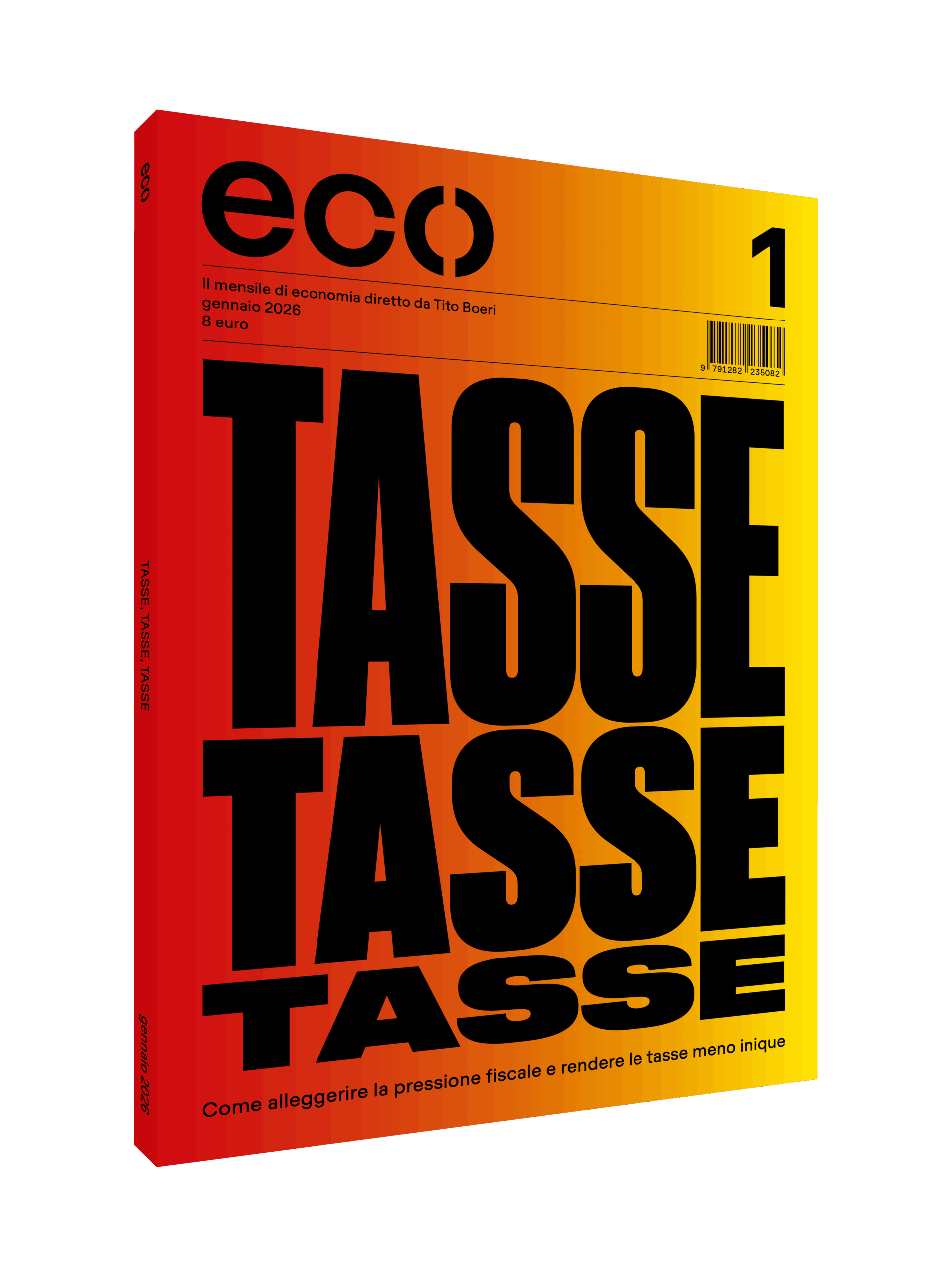
1/2026
Taxes, Taxes, Taxes
How to Ease the Tax Burden and Make the System Fairer
No one enjoys paying taxes, even though they are essential to keeping the state running – especially when the system feels opaque and unfair. That’s why politicians often promise tax cuts they struggle to deliver. Yet there is room for improvement: in Italy, smaller-scale tax evasion could be curbed by encouraging compliance through incentives rather than relying mainly on enforcement, while the system could be made more balanced by taxing wealth more effectively, reforming inheritance taxes, and updating property valuations.
Related products
-
Sale!
Behind Bars
Original price was: 6,50 €.4,90 €Current price is: 4,90 €.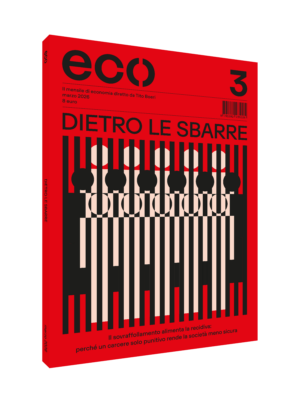 Overcrowding fuels recidivism: why a purely punitive prison system makes society less safe We know far too little about what really happens inside prisons. In this issue of eco, we look beyond the walls of our penitentiary system and let the data speak. The overwhelming majority of inmates serve their sentences in severely overcrowded facilities. This is a chronic problem that calls for structural interventions, including the construction of new prisons. It is not only a matter of upholding constitutional principles in the treatment of those who have committed crimes, but also of ensuring greater safety for society as a whole. Overcrowding and recidivism are in fact two sides of the same coin: a purely punitive prison risks becoming a training ground for crime. By contrast, where detention conditions are better, inmates can take part in work and rehabilitation programs that support reintegration and significantly reduce the likelihood of reoffending.Select options This product has multiple variants. The options may be chosen on the product page
 -
Sale!
What Banks Do with Our Money
Original price was: 6,50 €.4,90 €Current price is: 4,90 €.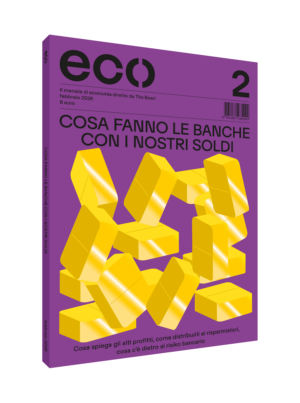 What Drives Their High Profits, How to Share Them with Savers, and What’s Driving the New Round of Banking M&A Bankers are among the most disliked – and envied – people in the world: they privatize profits and, in times of crisis, socialize losses. While bailouts can sometimes be unavoidable, they can be prevented with simple rules and strong, independent regulators. And profits, too, can be shared – not through one-off taxes, but by steadily lowering costs for customers and businesses. By contrast, heavy political involvement in banking M&A risks holding back the development of capital markets and reinforcing an economy still overly reliant on banks. Four years after Russia’s invasion of Ukraine, we also revisit the country’s economy and the situation of refugees in Europe, caught between the desire to stay and the hope of returning home.Select options This product has multiple variants. The options may be chosen on the product page
 -
Sale!
We Can’t Do Without Immigration
Original price was: 6,50 €.4,90 €Current price is: 4,90 €.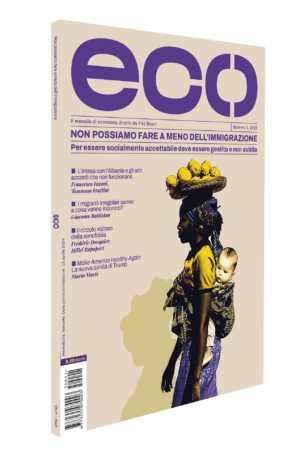 To Be Socially Acceptable, It Needs to Be Managed, Not Just Tolerated As promised to our readers, this issue of eco delves into immigration in all its complexities and contradictions. We increasingly rely on it to fill job vacancies and fund pensions, yet it remains a central concern for many. We don’t merely highlight the problems, government missteps, avoidable costs, unenforceable rules, or the gap between perceptions and reality regarding the number and identity of immigrants. We also aim to propose solutions that allow us to manage, rather than endure, immigration. From filling entry quotas to creating a pathway to citizenship and externalizing border control, we explore actionable strategies.Select options This product has multiple variants. The options may be chosen on the product page
 -
Sale!
Let’s Open Schools
Original price was: 6,50 €.4,90 €Current price is: 4,90 €.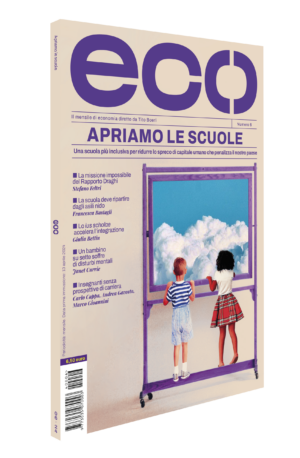 A More Inclusive Education System to Prevent the Waste of Human Capital in Italy Italy is facing a tremendous waste of human capital. Hundreds of thousands of well-educated young people struggle to find jobs, and when they do, they often end up in roles that have little to do with the skills they spent years acquiring through their studies. This is a loss we can no longer afford. Each year, about 100,000 people leave our workforce. Four years ago, only one in twenty companies reported staffing shortages; today, nearly one in two can’t fill vacant positions. To address this waste, we need to start with early childhood education, improve the quality of schools by valuing teachers’ work, and establish vocational pathways in higher education. Unfortunately, we are missing the opportunity presented by the National Recovery and Resilience Plan (Pnrr) to tackle these deep-rooted problems in Italy’s education system.Select options This product has multiple variants. The options may be chosen on the product page
