
Sale!

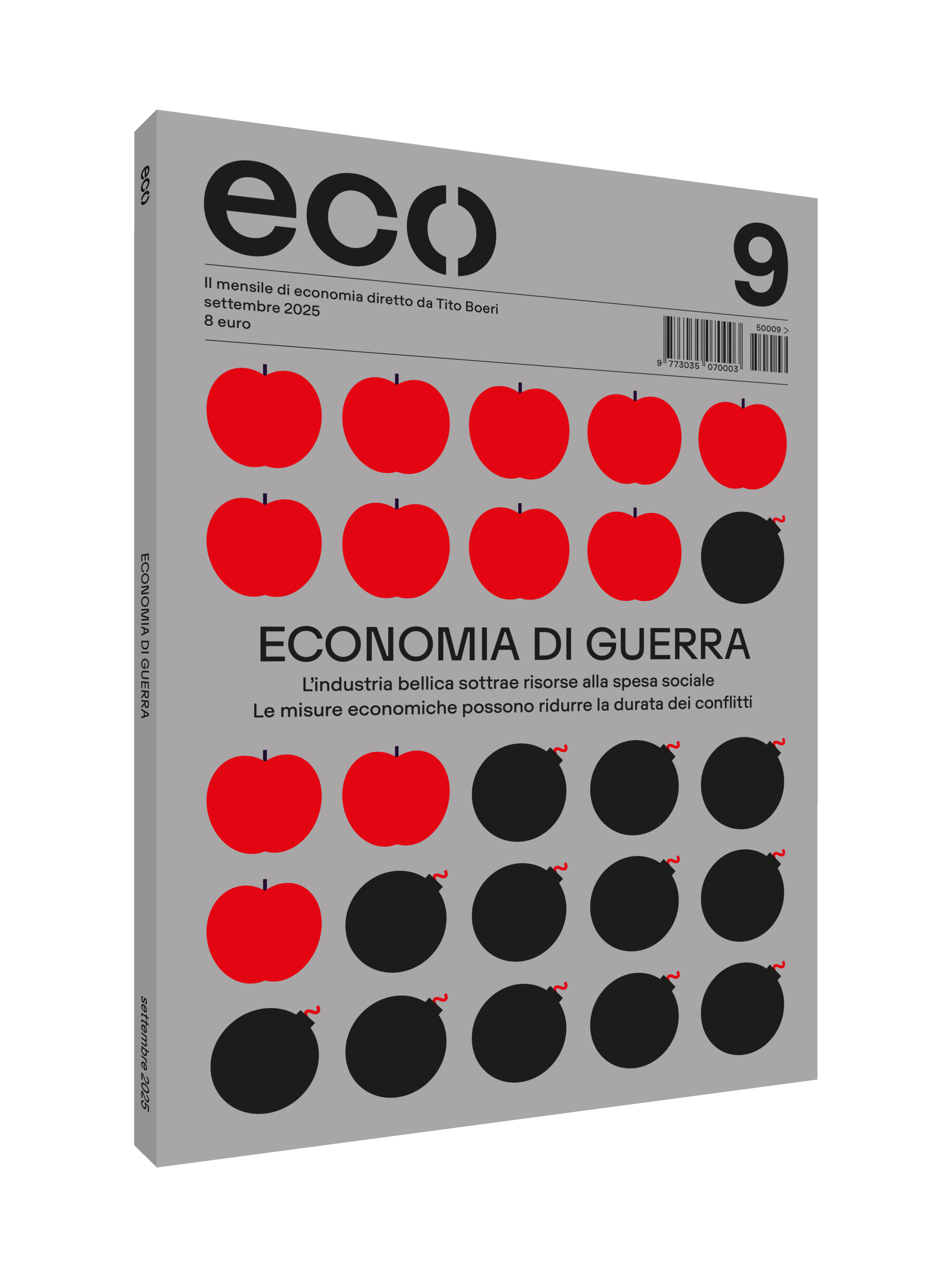
9/2025
War Economy
The arms industry drains resources from social programs. Economic measures can help shorten conflicts
Donald Trump may dream of a Nobel Peace Prize, but the facts tell another story: conflicts from Ukraine to Gaza are only growing worse. How can we shorten them? Economic sanctions can slow the flow of weapons and military supplies, while the cynical recruitment of Russian soldiers—sent to die at Putin’s command—must be halted. In this context, the West needs to speak plainly: shut the door on dictators and oligarchs, but offer refuge to those fleeing oppressive regimes and refusing to be coerced into the war.
Related products
-
Sale!
Skyward Cities
Original price was: 6,50 €.4,90 €Current price is: 4,90 €. The rise of vertical cities and the struggle to govern them Today, two out of three people live in cities, and urbanization shows no signs of slowing down. Despite predictions that remote work and artificial intelligence would lead to emptying cities, the opposite has happened. Cities are expanding upward, becoming denser and more vertical. This trend makes them increasingly difficult to govern, with decision-making often gridlocked by conflicts of interest—even over the simplest issues. To ensure orderly growth and promote collective well-being, national governments—which have become less influential in the age of globalization—need to refocus their attention on their major cities.Select options This product has multiple variants. The options may be chosen on the product page
 -
Sale!
What Banks Do with Our Money
Original price was: 6,50 €.4,90 €Current price is: 4,90 €. What Drives Their High Profits, How to Share Them with Savers, and What’s Driving the New Round of Banking M&A Bankers are among the most disliked – and envied – people in the world: they privatize profits and, in times of crisis, socialize losses. While bailouts can sometimes be unavoidable, they can be prevented with simple rules and strong, independent regulators. And profits, too, can be shared – not through one-off taxes, but by steadily lowering costs for customers and businesses. By contrast, heavy political involvement in banking M&A risks holding back the development of capital markets and reinforcing an economy still overly reliant on banks. Four years after Russia’s invasion of Ukraine, we also revisit the country’s economy and the situation of refugees in Europe, caught between the desire to stay and the hope of returning home.Select options This product has multiple variants. The options may be chosen on the product page
 -
Sale!
Economy and Crime
Original price was: 6,50 €.4,90 €Current price is: 4,90 €. The Impact of Organized Crime on Income and Employment, and Strategies to Reduce Widespread Illegality Organized crime not only destroys income and jobs but also takes human lives. We can combat it more effectively using artificial intelligence, provided we fully utilize available databases to predict the future actions of these organizations. Widespread illegality undermines our social fabric and diverts resources that could otherwise fund public goods. To tackle the issue of youth gangs, it is crucial to invest in schools and social spaces in peripheral areas. Additionally, providing legal sources of income to those in poverty is important. Our findings show that in already disadvantaged families, job loss or the costs associated with parenting push fathers towards crime. This is a crucial consideration for family support measures and social assistance programs.Select options This product has multiple variants. The options may be chosen on the product page
 -
Sale!
Irresponsible Capitalism
Original price was: 6,50 €.4,90 €Current price is: 4,90 €. Why companies are retreating from environmental and inclusion commitments – and how to revive their engagement In just four years, ESG – the idea of renewing capitalism by asking companies to take responsibility for environmental, social, and ethical issues alongside shareholder interests – has fallen out of fashion. Major missteps have fueled the pushback from the current U.S. administration, but the underlying reasons for ESG remain unchanged, from global warming to the poor ethical standards of many corporations. In this issue, we offer several ideas for rebuilding environmental and social commitment on stronger foundations and for increasing transparency around how companies generate their profits.Select options This product has multiple variants. The options may be chosen on the product page
